


You have no doubt seen all of the headlines about AI investments, new large language models, and the companies behind them. As your advisor, I want to help you step back from the daily news and understand the bigger picture of what AI really means for markets, the economy, and your portfolio.
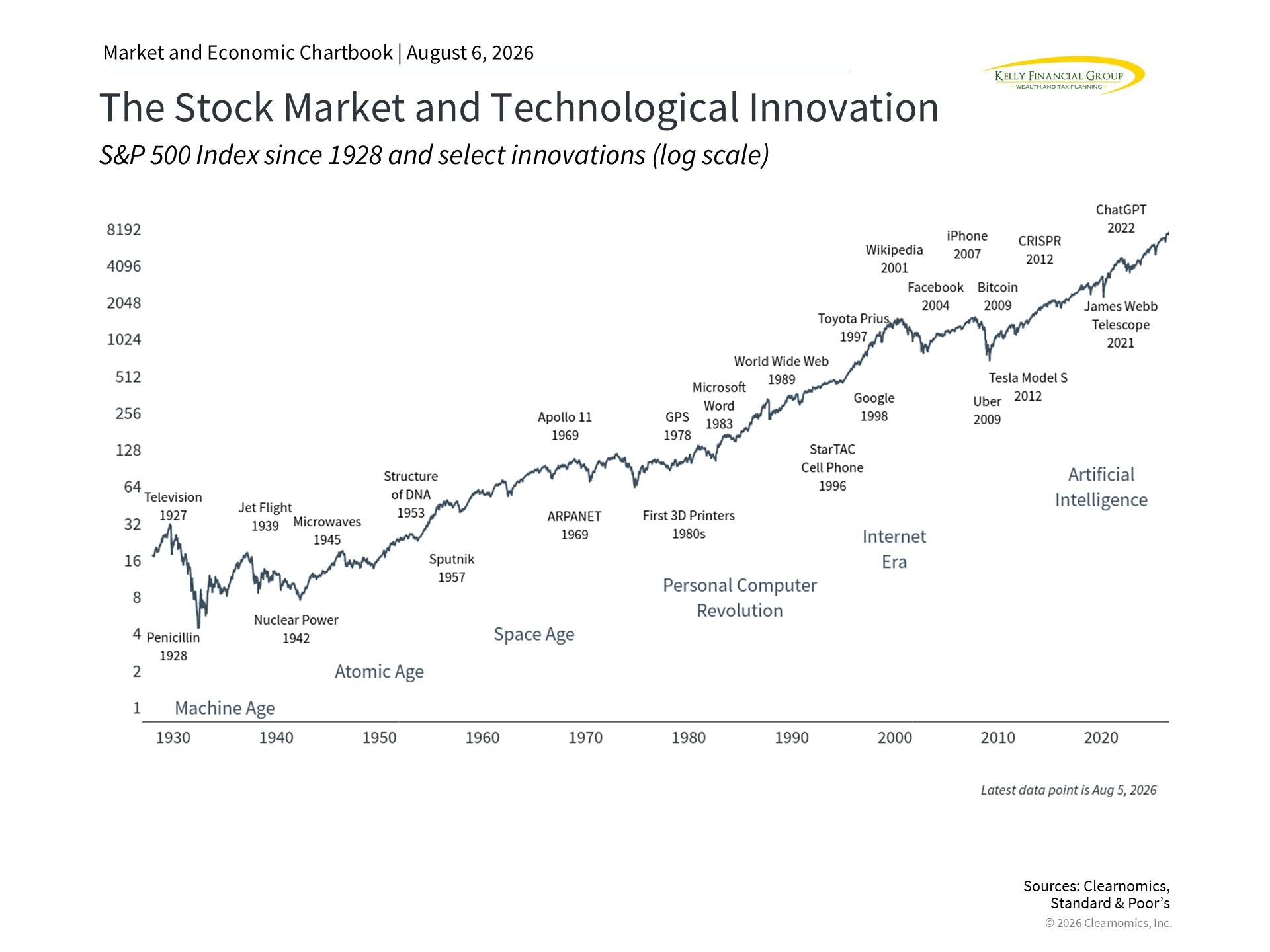
The key fact is that AI is not just about chatbots or a few stocks. Instead, a broad set of industries, business models, and investment opportunities make these capabilities possible. This is similar to the technology boom of the 1990s which may have begun with a few companies, but is now a large, important part of the overall economy.
Understanding the most important parts of the AI value chain
When most people think about AI investing, they think about companies like Google, OpenAI, Anthropic, and others. These are the firms building the large language models that power tools like Gemini, ChatGPT, and Claude. But they represent only one piece of a much larger puzzle.
At the foundation is semiconductor hardware, including GPUs and memory chips, which are needed both to train AI models and to run them. Training a large AI model requires thousands of connected servers working together for months. Running these models requires computing resources every single time someone enters a prompt. This is why demand for specialized chips has grown so dramatically.
These chips are housed in data centers, which are essentially warehouses filled with servers that run around the clock. They require significant amounts of electricity, cooling systems (including water), and physical infrastructure. Spending on data center construction has surged, contributing to overall economic activity.
Finally, there are the businesses and software providers that are putting AI to work. This includes everything from AI-powered applications to businesses using AI internally to improve productivity. This layer is perhaps the hardest to evaluate right now since it will take time to see measurable results.
How will AI impact investors?
One of the central questions in markets today is whether the enormous sums being invested in AI infrastructure will eventually generate sufficient returns. The largest technology companies are spending hundreds of billions of dollars building out data centers and computing capacity. This has led to volatility in AI-related stocks over the past year, as investors have shifted back and forth between optimism about growth and concerns about whether demand will keep pace.
History tells us that even when a trend is real, it often takes time for it to play out. After all, today’s megacap tech companies have taken thirty years or more to get to where they are today. In the meantime, markets can overestimate how quickly new technologies translate into profits. Perspective and portfolio balance are important virtues in scenarios like these.
As AI has captured investor attention, valuations across technology-related sectors have risen steadily. It is worth noting that these higher valuations reflect strong earnings growth for many of these companies as well. The Information Technology sector currently trades at elevated levels relative to its own history and relative to the broader market. Other sectors containing large technology companies, including Communication Services and Consumer Discretionary, show similar patterns, reflecting expectations about future profitability.
Your portfolio is designed with all of these considerations in mind. It provides participation in the growth potential of technology and AI-related industries while also maintaining exposure to areas of the market that offer confidence and value. This kind of balance is what allows investors to stay on track through the inevitable periods of market volatility that come with any major technological shift.
The most important thing to remember is that your long-term financial goals, whether that means a confident retirement, providing for your family, or building lasting wealth, should not change based on any single market trend. The principles that guide your financial plan are built to work across many different market environments.
As always, please do not hesitate to reach out if you have questions or would simply like to talk through what these developments mean for your specific situation.
The opinions voiced in this material are for general information only and are not intended to provide specific advice or recommendations for any individual. All performance referenced is historical and is no guarantee of future results. All indices are unmanaged and may not be invested into directly. Stock investing includes risks, including fluctuating prices and loss of principal