


As we enter the fourth quarter of 2026, I wanted to share a brief update on key market developments and what they may mean going forward.
The past quarter was defined by two major themes pulling in different directions. On one hand, interest rates climbed to their highest levels in over two decades, with the 10-year Treasury yield well above 5%. On the other hand, corporate earnings continued to grow at a strong pace, supporting stock prices and helping major indices reach new all-time highs. Through all this, the S&P 500 generated a total return of 2.3% for the third quarter and was up 12.7% year-to-date, while the Nasdaq gained 16.1% through the same period.
Even though the bond market has faced pressure as rates have risen, bond yields are now at their most attractive levels in many years, which is a positive development for balanced portfolios. Elsewhere, the breadth of returns across asset classes has been encouraging. For example, commodities rose sharply, with oil prices back near $100 per barrel due to ongoing geopolitical tensions in the Middle East, and international markets remain near their peaks.
Navigating Higher Interest Rates
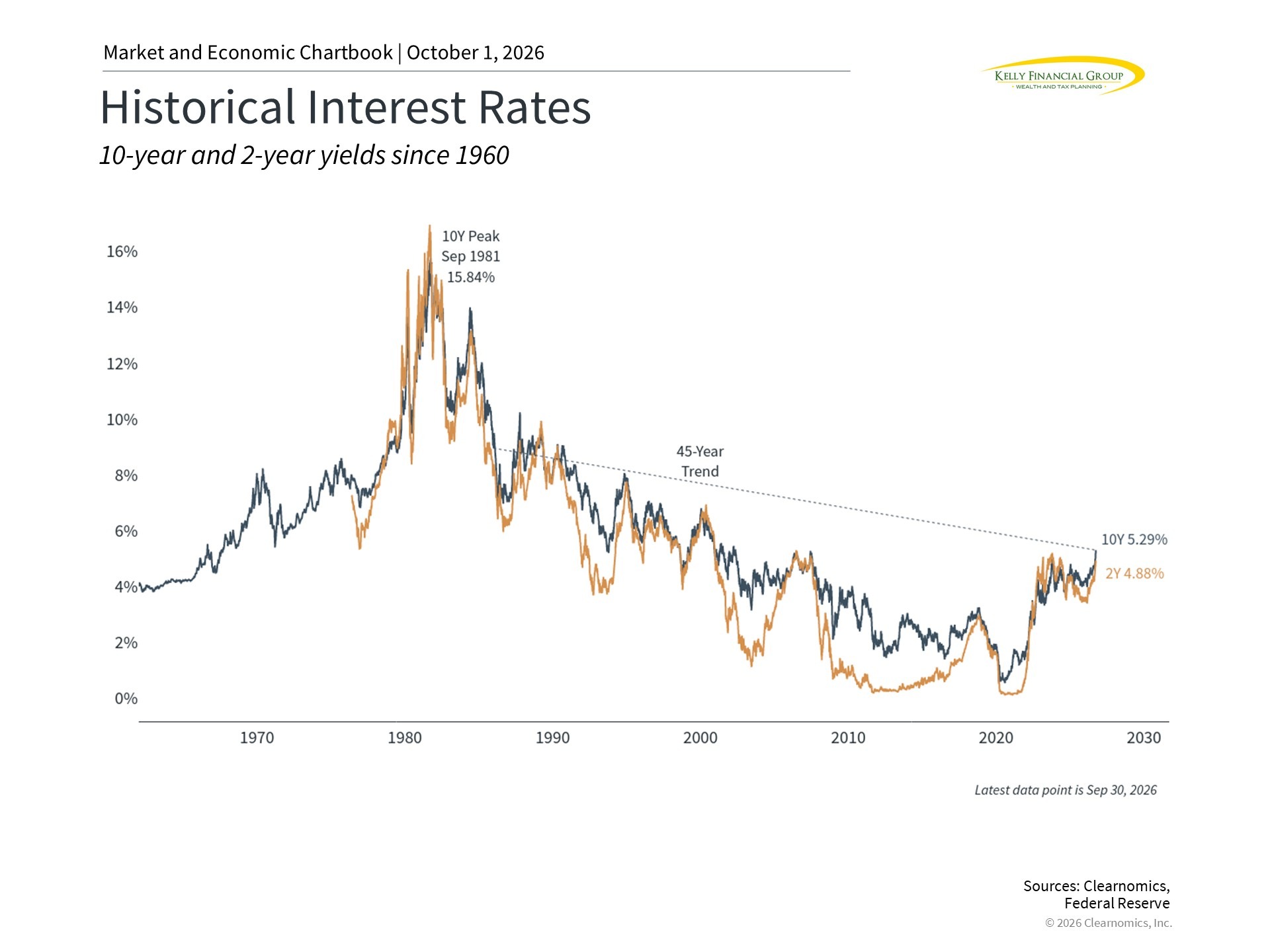
The steady rise in interest rates is one of the most important developments to understand right now. For many years following the 2008 financial crisis, low interest rates were a defining feature of the investment landscape. However, that has turned around in recent years. The 10-year Treasury yield ended the third quarter at nearly 5.3%, a level we have not seen in about twenty years.
In the short run, higher rates are a challenge for bond prices. The Bloomberg U.S. Aggregate Bond Index, used to measure the overall bond market, fell 3.5% in the third quarter.
However, the income that bonds now generate is substantially higher than it has been in over a decade, which is important for many portfolios. For long-term investors, today's yield environment is one of the more attractive in recent memory.
Higher rates also affect the broader economy and households in many ways. For example, the average 30-year fixed mortgage rate has moved back above 7% according to Freddie Mac. This created a disincentive for homeowners who locked in lower rates in prior years to sell their homes. This has slowed housing market activity, which is one of the ways that higher interest rates work their way through the economy over time.
The Fed Raised Rates for the First Time in Three Years
At its September meeting, the Federal Reserve raised its key policy rate by one-quarter of a percent to a range of 3.75% to 4.00%. This was the first rate increase in three years and came after a series of cuts that began in late 2024. The move was widely anticipated by investors, and markets absorbed it without significant disruption.1
The primary reason behind the hike is higher energy prices, which have pushed headline inflation back up. Inflation has remained stubbornly above the Fed’s 2% target, with headline CPI most recently at 3.4%, while core CPI, which strips out food and energy, rose only 2.4% year-over-year. The Fed cannot solve the conflict in the Middle East with monetary policy, but it can try to prevent those pressures from spreading more broadly across the economy.
Current projections suggest the Fed may raise rates one more time before the end of the year and then hold steady through much of 2027. As always, these projections are subject to change depending on how the economy evolves. What’s worth keeping in mind is that historically, rising interest rates and rising stock markets have coexisted, particularly when the economy and corporate earnings are healthy. The third quarter offered a good example of this.
The Midterm Election and Staying Focused
Another important topic to mention is that the November midterm election is approaching and there will be more political headlines. Elections may be very important politically, but when it comes to your portfolio, history suggests it’s important to stay impartial.
Over the past century, markets have performed well under a wide range of political configurations, including divided governments.2 The underlying drivers of market returns, such as corporate earnings, economic growth, and the business cycle, matter far more than which party controls Congress. It’s also not unusual for presidents to lose their Congressional majorities during midterm elections. This occurred during the recent presidencies under Biden, Trump’s first term, Obama, Clinton, and others.
This is not to say that politics never create short-term market swings. Over the past year, tariffs, tax policy, and issues surrounding the national debt have led to market uncertainty. In each of these cases, markets remained resilient. So, while the past is no guarantee of the future, the key is to avoid making long-term portfolio decisions based on this. Your financial plan is designed to hold up across a range of political and economic environments.
Looking Ahead
As we near the last months of the year, the same themes that shaped the third quarter will likely remain in focus. Interest rates, oil prices, the pace of AI investment, and the midterm election will all attract attention.
What we do know is that corporate earnings remain strong, the economy continues to grow, and a broad range of asset classes have contributed to portfolio returns this year. Maintaining balance and a long-term perspective continues to be the most important principle guiding how to think about your portfolio.
As always, please do not hesitate to reach out if you have any questions or if you would like to discuss what these developments mean for your specific situation.